


The Hardcore Optimism of Milo Keller
A visionary leader at the Swiss art school ECAL, Keller advanced an ambitious and experimental program.
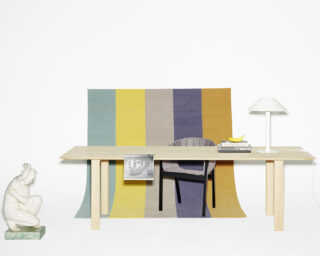
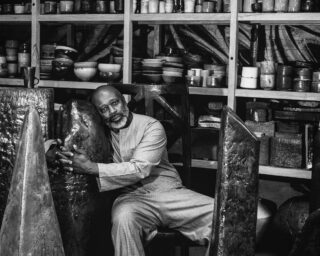
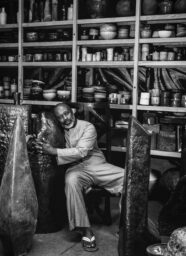
Milo Keller, Table Wogg 56, Chair Wogg 42, 2007–2012. Design by Jörg Boner
© the artist
Milo Keller loved the word hardcore. He used it when we interviewed candidates for the graduate photography program at the University of Art and Design Lausanne, Switzerland, or ECAL. He would lean forward with a half-smile and say, “This course is hardcore. Are you ready for it?” The faces across the table often looked puzzled, sometimes even afraid. But for Milo, hardcore was never a threat. It was a mantra. It meant curiosity pushed beyond comfort, work carried further than most people thought possible, and ideas pursued until they opened something genuinely new. Hardcore was not a pose. It was the way he lived.
Milo died in December 2025. I first met him in the early 2010s, when we ended up in a pub in London. Milo kept buying rounds, refusing to let the night end. At some point I begged the bartender to serve me water in a shot glass, secretly, just so I could stay afloat. But what defined Milo was not his excess, even if his parties became legendary. It was the morning after, when he would show up in Lausanne to start teaching at eight. Work hard, play hard.

Courtesy ECAL
Milo was born in 1979 and raised in Ticino, the Italian-speaking canton of Switzerland. I interviewed him recently for a forthcoming book (Views on Things, produced with Jörg Boner), and he spoke about being raised by a Swiss German father—an architect, rational and disciplined—and a Catholic mother with strong ties to Italy, associated with warmth, sociability, and openness. It was not conflict but a coexistence of two worlds that he learned to hold together. He recognized that same duality throughout his life and work: discipline and openness, planning and intuition, order and chaos.
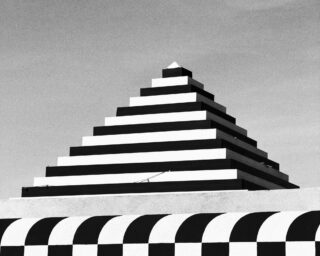
As a photographer, Milo spoke about images as “spaces to be resolved.” His work began with an architectural sense of order—volumes arranged, lines stabilized, compositions built with deliberate precision. Once an image felt too resolved, he felt compelled to unsettle it. His photographs exist in a fragile equilibrium, where structure is never complete without disturbance, humor, and, at times, eroticism. That sensibility also shaped his engagement with places like Ivrea, where the architecture of Olivetti’s abandoned offices sits between modernist social idealism and decay.
Milo was first a student at ECAL, and in 2012, he was invited back to lead the BA in photography; in 2016, he established the MA Photography program. In these roles, he shaped the department around a pedagogical framework that was strict, structured, and work-driven. Students were expected to be present from early morning until late afternoon, and Milo insisted on an intensive rhythm of classes, workshops, production periods, and critiques. Technical competence, reliability, and discipline formed the foundation. It was precisely because he built such a defined framework that experimentation became possible. Inside that structure, he encouraged students to introduce uncertainty, accident, and risk into their work. He was drawn to candidates with temperament and character rather than polish, and he brought in practitioners working with emerging tools and approaches, including photogrammetry, CGI, sculpture, moving image, virtual and augmented reality, and, more recently, artificial intelligence. The framework was his method; the space inside it was playful and unpredictable.
The aesthetic that emerged around the program during his tenure is often described as “ECAL style.” The images are precise and controlled, built through staging, careful lighting, and refined production values—a visual clarity that carries traces of advertising and studio language, even when the work moves into documentary or fine art. He was uneasy with the idea that a school might be reduced to a look, and he knew how many former students worked far outside that vocabulary. But the style exists, and it has become widely recognizable. Whether he embraced it or not, it remains part of his legacy.
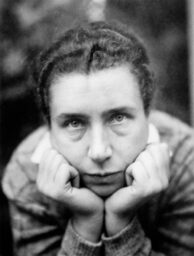
Photograph by Mahalia Taje Giotto. Courtesy ECAL
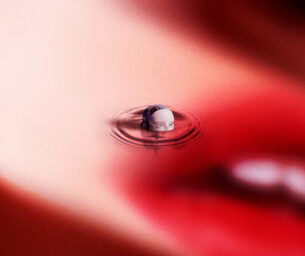
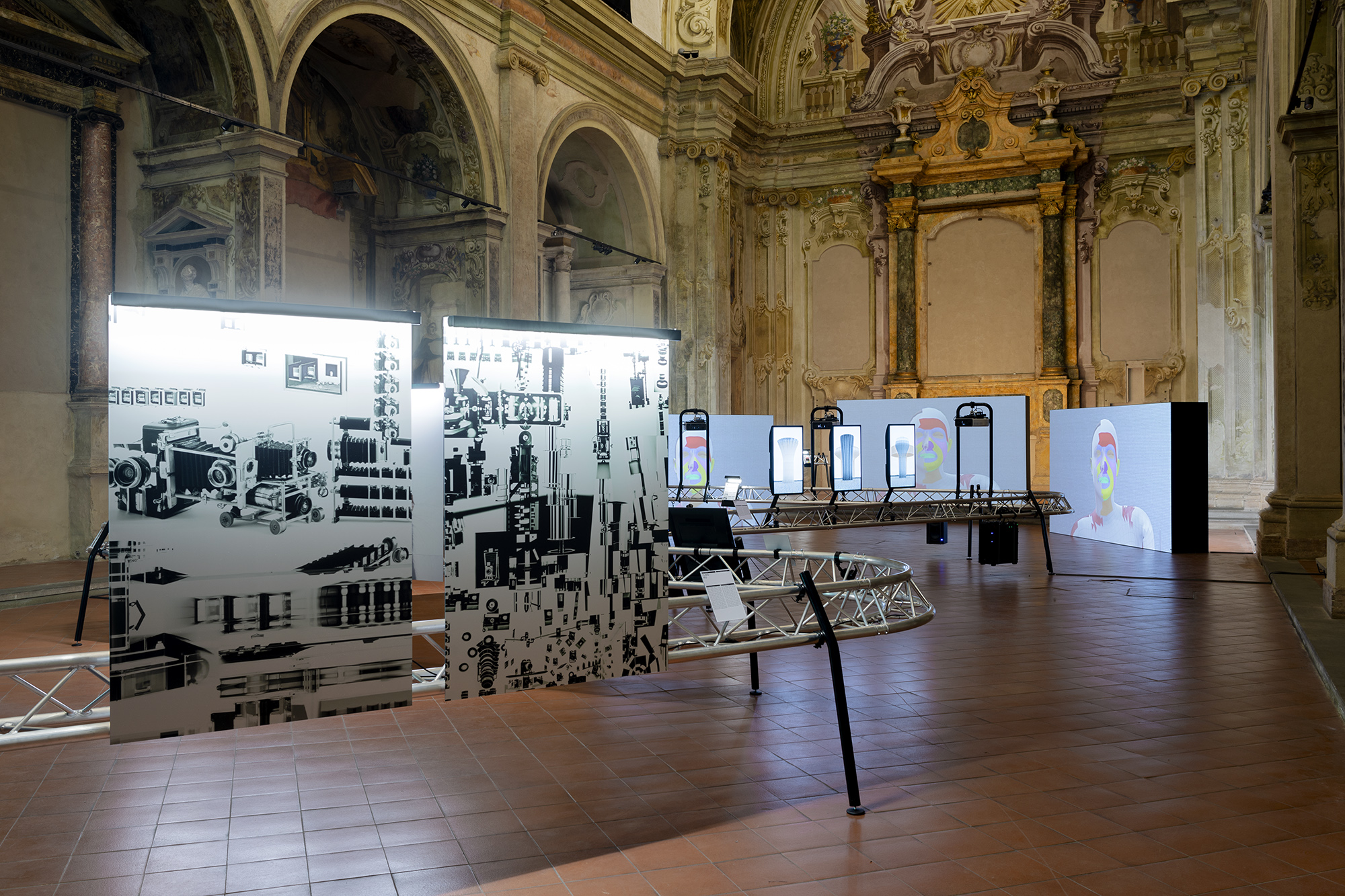
Alongside teaching, Milo also developed a research program within the department, conceived as a laboratory devoted to critical and collective inquiry. Each cycle begins with a question about the future of the medium and unfolds through workshops, prototyping, and discussions with students and invited artists and thinkers, extending into traveling exhibitions, publications, and online platforms. Augmented Photography (2016–17) explored the status of the photograph and its production in a post-photographic era, when images become malleable data. Automated Photography (2019–21) weighed the effects of automation and computation on production and authorship. The current project, Soft Photography, focuses on the emotional stakes of images generated by artificial intelligence, pointing toward a future that many approach with uncertainty and anxiety.
Across this work, the question of where photography may be heading remains central. While much of the field tends to meet technological change with apprehension, Milo approached such transitions differently. He treated them as opportunities to think, test, and work, engaging with them inside the space of education. His optimism was not naive. It was grounded in practice and in the belief that the medium could always be expanded and challenged head-on. That same attitude shaped his relation to students. He believed that each of them contained possibilities beyond what they imagined for themselves, and he pushed them toward those thresholds with forcefulness and trust.
Milo Keller leaves behind photographs, research, exhibitions, and the achievements of many former students. But more than any single body of work, his legacy lives in this hardcore optimism: a conviction that the medium can still change, and still matter, that individuals can exceed their own expectations, and that possibility is something to be acted upon. It is an optimism directed at humanity, and it resonates with particular urgency in the moment we are living in now.